Showing posts with label book. Show all posts

Saturday, May 6, 2023

NLTE to Governor DeSantis: Make Public School Libraries Safer

Dear Governor DeSantis and Commissioner Diaz - and Ladies and Gentlemen all:

As I am one of a very few de facto community leaders charged with making the content of our Florida public school libraries safer for America's children, I implore you to prepare an edict or strongly worded directive to more effectively help protect our children.  I'll provide an example below.
  • The FLDOE training for Media Specialists, that thankfully now includes the words "err on the side of caution," is NOT having the desired effect.
  • In each district, subject to the whims of the school board and many other entities, we are seeing some truly terrible titles be reviewed then retained.
  • Our children continue to be exposed to porn and other horrors.
  • The keyword, "caution," is the issue.
  • Some of the Media Specialists and purchasers (and authors and publishers) are actively aligned with the ALA [American Library Association] agenda (avowed Marxism).
  • Sadly, this is sometimes also true of superintendents and teachers and school board members.
  • Many of these persons are still denying ANY book is inappropriate for ANY child.  Their "free speech absolutism" is the opposite of caution.
  • In my rather conservative county (Clay) there have already been 97 titles permanently removed.  The resistance to these removals has been, and is today, extraordinary.
  • These same persons are screaming about "censorship" and "book banning" yet all 97 of these books can still be found at public libraries and bookstores and even online.
  • I do not feel we have truly banned a single book.  We just moved them further away from innocent children.
  • I am never going to apologize for my passion to "err on the side of caution" and protect innocence.  I expect so far we agree.
The sample below stems from my experience fighting (and often losing) the same battle for the last 10 plus years.  I hope this serves you and is found worthy of your consideration.

SAMPLE EDICT/DIRECTIVE: 
(My apologies for the length)

To the attention of every Florida public school Superintendent and Principal and Attorney and School Board Member, as well as interested parties of the ALA; NEA; NEFEC; FSBA...:
Whereas Florida State Statutes and Laws provide guidance regarding all books in any location on public school grounds, this directive is issued to clarify the cumulative intent of these Florida State Statutes and Laws. 
Further clarification may be included in your local district policies.  Note that the subtle differences in definitions between a book in any teacher's personal public school classroom library, and a book in the common public school library, and any book that is a relevant part of the curriculum, are not to be treated as justifications for failing to "err on the side of caution" as noted in the Media Specialists training.

1. PORN: Books may not contain pornography.  One single passage or page with pornographic content is sufficient to disqualify a book from purchase.  The book's "artistic value" or "serious literary value" is not relevant.  Regarding books previously purchased, a pornographic passage or page is sufficient for its immediate deselection and/or removal.  Such books should not require any further analysis or committee review prior to deselection.  Such books should not be resold or gifted or destroyed.  They should be returned to the publishers with the explanation that the publisher failed to provide sufficiently accurate product summaries, and that since these items violate our Laws, the publisher may be held accountable and *disqualified from any future sales. 
I personally suggest requesting a ZERO dollar credit - for dramatic effect.
Note that an image or description of breast-feeding is not porn.
See Fl. S847.001 [explicit sex/obscenity] and S847.012 [harmful to minors] and HB 1467 [transparency in book selections - with *accountability]

2. GENDER THEORY AND COMPREHENSIVE SEX ED: While the world is a dynamic place and family structures vary, Humans are almost always specifically male or female. Fl S.1003.46 (2a and all) direct public schools to teach "abstinence from sexual activity outside of marriage as the expected standard for all school-age students while teaching the benefits of monogamous heterosexual marriage." Books in any location on school grounds ought to reinforce, or at the very least, not conflict with this statute. Books that mention or promote a sense of gender fluidity; (pre-marital or post-marital) promiscuity or other reckless sexual activity; homosexuality or non-heterosexual sexuality; alternate sexualities; multiple sexual partners or group sex, casual abortions; are in conflict with this statute and should be immediately deselected. Again, these are contrary to statute and should be expedited and returned as above. Generally, there should not be a romance section in a school library. Romance is rarely platonic. Ensure your purchasers select books that deal with more educational subjects and, as above, return the deselected items to the publisher. Note that a book may contain a person that is confused about their sexuality or is not a heterosexual. In general, any book in any public school should not be focused on any person's sexuality.
See HB 1557 [The Parental Rights in Education Act, commonly/incorrectly referred to as the "Don't Say Gay" Bill]; See also HB 7 and SB 300 [both relating to pregnancy and parenting support]

3. UNSOLICITED THEORIES/Critical Race Theory/DEI/WOKENESS: The U.S. Constitution and Florida Law requires that no child (or Adult) be made to suffer for their race or religion. Florida Law does require we teach the true history of uncomfortable topics such as the Holocaust and slavery. The "anti-racist" theory of CRT is in conflict with law. CRT is a theory designed to CAUSE division rather than promote a harmonious environment for education. Many books are known to have been intentionally infused with passages that support CRT. These books will only rarely include the words "critical race theory" or "culturally responsive training." In order to more efficiently deselect these CRT items, they should be read or searched for the keywords that often reveal CRT content. Same applies to the modern tussle over wokeness. Same remedy required. Return the deselected items to the publisher.
A fairly comprehensive list of suggested search terms is provided here: https://www.noleftturn.us/crt-code-words/ - I'd add "belonging" to the list as this term is likely to be abused by some people.
Note that historical or current references to racist behavior are acceptable unless they promote that racism or intend to increase disharmony overall.
See Fl. HB 1467 [transparency in book selections - with *accountability]

4. HISTORICAL LIES/PROPAGANDA/ANTI-POLICE/ANTI-GOVERNMENT SENTIMENT: We pledge allegiance to the American flag. We stand for the National Anthem. We honor our Veterans. We respect our police. We live in a Constitutional Republic.
Books that call America a "Democracy" or promote the benefits of Socialism or Communism, should be purchased sparingly and only as needed for a curriculum designed to show that the use of propaganda is dangerous.
Note that judicious use of "The Communist Manifesto" and "Mein Kampf" can be helpful in this regard.
Whenever possible, unless crucial to a lesson about the danger of historical lies, apply the same treatment. Expedite and return the deselected items to the publisher.
See US Constitution - Article 4 Section 4 [The United States shall guarantee to every State in this Union a Republican Form of Government]

5. VIOLENCE and GUNS: There have been mass shootings at some of our schools. Many schools are occasionally locked down for a variety of sound efforts to maintain safety. Our children now regularly participate in "active shooter drills."
It's terrifying to most parents and our children that such drills are even required.
Accordingly, there is no good reason to provide books to children that glorify murder or trivialize weapons or death. Please apply the same treatment. Expedite and return the deselected items to the publisher.
Note that books detailing the horrors of an historical war or armed conflict, are not required to be deselected.
Note that books that describe the safe handling and operation, as well as the mechanical design of weapons, are not required to be deselected.
See Fl. 1006.28 [Duties of district school board, district school superintendent; and school principal regarding K-12 instructional materials]

6. MANGA and Graphic Novels: Picture books are appropriate for children learning to read. Manga and young adult graphic novels (comic books) often contain the prohibited content discussed above. Unless a graphic novel is found crucial to higher learning and free of the inappropriate content above, it should be removed from school grounds.
Literate students should access these types of books in a public library outside of our schools, if desired.
They are a distraction and hindrance to learning. Please apply the same treatment. Expedite deselections and return the items to the publisher.
See Fl. 1006.28 [Duties of district school board, district school superintendent; and school principal regarding K-12 instructional materials]

7. SHADES OF GREY: We recognize that some books may offer contrary perspectives on topics as varied as serial monogamy; Global Warming; politics in general.
When choosing books for America's children, please continue to "err on the side of caution!"
I hope you all find this informative and helpful.

Commissioner Diaz: Please reach out to me by phone or email at your earliest convenience.

Respectfully,
Bruce

--
Bruce Friedman - concerned parent
Chapter President
No Left Turn in Education - Florida
bruce.friedman@noleftturn.us


TO:
GovernorRon.Desantis@eog.myflorida.com
mannydiaz@fldoe.org
Brandy.Brown@eog.myflorida.com
parentalrights@fldoe.org


###     30     ###     30     ###


Above is a letter submitted to Governor Ron DeSantis as shown, active links, formatting for the web, and graphics from Bruce Friedman added by me.

Below is the same Bruce Friedman being silenced by his school board for daring to read aloud the books his school board approves for school children to read.  The adults aren't allowed to hear it, not even those sitting on a governing school board, but the school children get it from school librarians?  

Notice the huge engagement numbers because everyone knows this is wrong while the librarians keep falsely claiming it's a First Amendment right guaranteed by ALA's so-called "Library Bill of Rights," as if it were the real thing, as if it trumps community standards, state law, and US Supreme Court cases.


By the way, school boards violate open government laws by silencing parents reading school books:

Kleinman, Dan. “Parents May Legally Read Explicit Books at School Board Meetings: Mama Bears of Forsyth County v. McCall.” SafeLibraries® (blog), February 7, 2023. https://safelibraries.blogspot.com/2023/02/parents-may-legally-read-explicit-books.html.

—
URL of this page: 


Thursday, March 9, 2023

Exposing the Book Ban HOAX: Florida Governor Ron DeSantis Press Conference

Book banning is a hoax, as Governor Ron DeSantis explains at his press conference entitled, "Exposing the Book Ban HOAX."  Listen to his press conference.  He destroys the false lies spread by librarians.  Just destroys them.  Are librarians in your state pulling the same shtick?  Absolutely they are.  Listen to Ron DeSantis to know how a real leader really leads and to wise up as to how librarians are pulling the wool over your eyes.

See:

Staff. “Governor Ron DeSantis Debunks Book Ban Hoax.” Office of Governor Ron DeSantis (blog), March 8, 2023. https://www.flgov.com/2023/03/08/governor-ron-desantis-debunks-book-ban-hoax/.

Because of the American Library Association from Chicago, IL, schools nationwide are flooded with many school books filled with educationally unsuitable material of a pervasively vulgar nature.  Oh, and they say parents should not control schools—while they do.  The head of ALA's, get this, "Office for Intellectual Freedom," teaches librarians they know the material is s3xually inappropriate for school children but, who cares, we have kids to s3xualize and indoctrinate, so simply "reframe" the books as "diverse" and "inclusive."  See how this works?
But ultimately, we found that the thing that needs to happen most, and it needs to happen before these bills are introduced, is sustained uh messaging that reframes this issue um that uh that takes it away from the idea that these are inappropriate for minors, or s3xually inappropriate for minors, and promotes them as diverse materials and programming that are about inclusion, fairness, and protection of everybody's right to see themselves, and their families reflected in the books in the public library.

✂️ American Library Association Admits Some School Books Are “S3xually Inappropriate for Minors” So Are Reframed as “Diverse” and “Inclusive.” Webinar: Banned Books Uncensored: LGBTQIA+ Stories & Gender Identity, 2020. https://www.youtube.com/clip/UgkxkMJFBkH5IFLMAaQaDR1iups-9FDZ5tNj.


Try to assert common sense and one is immediately attacked by librarians as a "book banner."  Librarians flood the zone with inappropriate material and anyone speaking out against this is a book banner.

Librarians will even pull out the big guns to spread the lies.  Here's author Judy Blume implying Ron DeSantis is "very scary" while CBS Sunday Morning spreads the "book banning across the US" lie:


Well one state governor has had enough of the lies used to groom school children, Governor Ron DeSantis of Florida.  If only other governors would speak out in this fashion:
So a lot of that what's been going on is an attempt to create a a political narrative and it's a false political narrative and that's, that's bad enough as it is, I guess, but for me uh the important thing is that's a false narrative in service of using our schools, uh, for indoctrination rather than education.  ....  Uh, that is p0rnographic, why would we have that in a media center with the ten year old students, it's just wrong, and a lot of parents now have been empowered uh to make sure that these are appropriate environments....  [p]arents ... should not have to worry about this garbage being in the schools....  They are using your tax dollars to put that in.  How is that an appropriate use of tax payer dollars to put that in, so what you've seen is a lot of uh false narratives put out....
Listen to the press conference to hear again and again for over an hour about the fake lies librarians set up to make people think children have a First Amendment right to inappropriate material or to Marxist indoctrination in schools.  These are the same lies they use nationwide.  Learn the lies.  Expose your own librarians using the same lies in your own communities.  Get them fired like the lying librarian with the empty shelves got fired in Florida.  


To follow the lies on Twitter, follow #UniteAgainstBookBans, #FReadom, #BannedBooksWeek, #WeNeedDiverseBooks, #BannedBooks, and this year only, follow #AASL23 for the Tampa, FL, conference in October of the very school librarians spreading the very lies the Governor exposed.

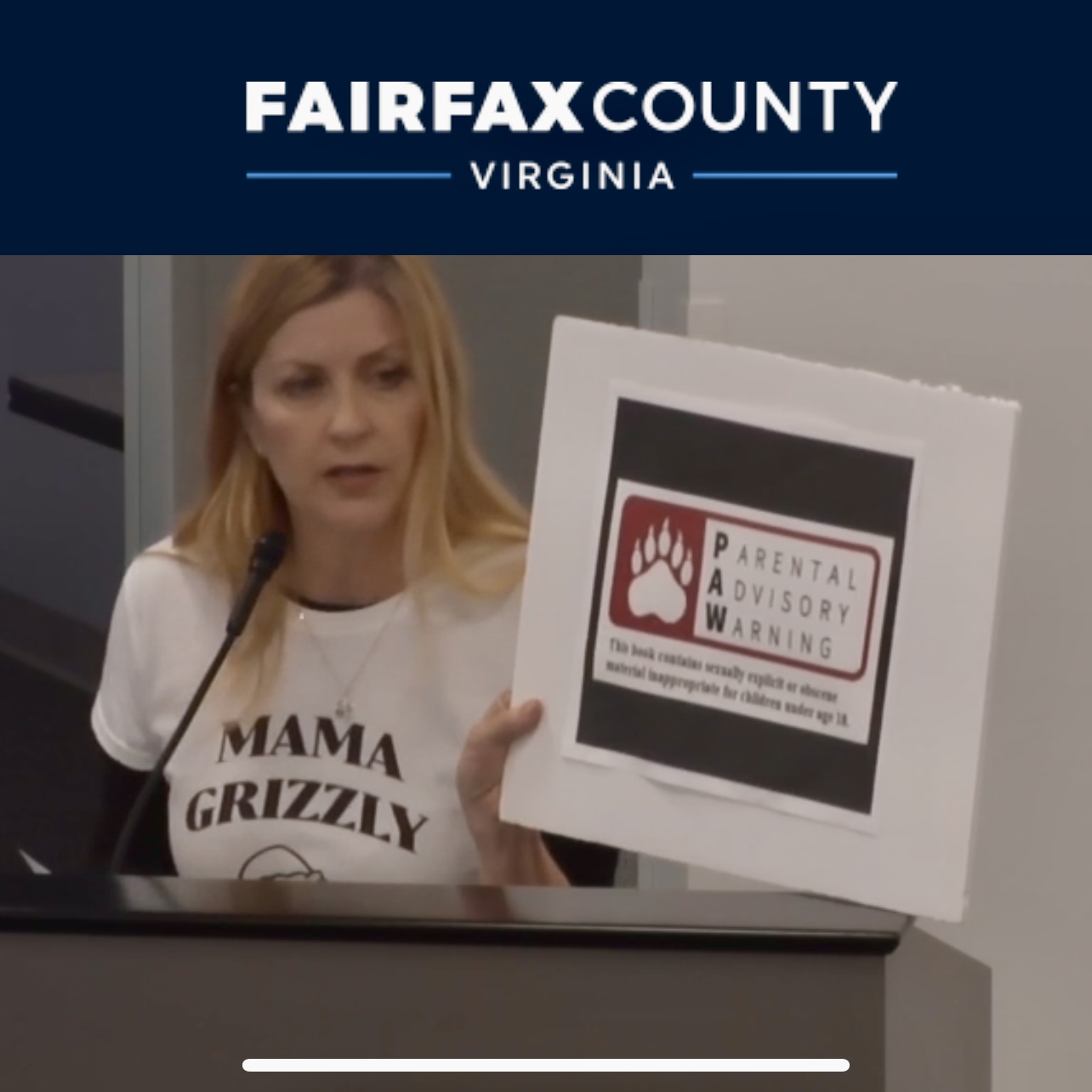
During the press conference a black mother named Tia said she's with Moms For Liberty and that she was attacked for being a "token" black by the people wanting to keep the kids reading the s3xually inappropriate material.  She said it's a lie when librarians claim it's just Republicans or conservatives who seek to "ban" books.  She also called for warning labels on the books [like PAW Prints].

Then more mothers got up to say how bad the books in schools really are.  Gender Queer, of course, was mentioned.  Oh!  A satanic orgy!  I must read that!  And the gay hook up app in This Book is Gay that's in a middle school library.  The school committee voted to keep the grooming book in the school library.  "It is simply not fair to slap on the book banner label."  "It is simply a lie to say this books are banned."  "This is educational malpractice."

Dr. Stacy Hahn of Hillsborough County School Board, so good.  "It is very difficult to be in the minority on a school board."  "We have K-8 schools where these books are in those libraries."  PARENTS: YOU MUST WIN POSITIONS ON SCHOOL BOARDS.

Then the Governor spoke again: 
But you know it's also an opportunity cost with the school.  Every minute you spend focusing on some of this p0rno, p0rnographic stuff, well that's less time you're spending on doing the things that really matter to our kids in terms of them getting the education they need in math, and reading, and all these other things, and so it's, um, the only way you make that decision, in my judgment, is if you're putting your own agenda ahead of the wellbeing of the students, and, and that's what we see too, too often.
As to "putting your own agenda ahead of the wellbeing of the students":

Kleinman, Dan. “Openly Marxist American Library Association Needs To Be Defunded.” SafeLibraries® (blog), January 30, 2023. https://safelibraries.blogspot.com/2023/01/openly-marxist-ala.html.

Oh this press conference is all so good.  Listen to it all.  The grooming has got to stop.  We shouldn't need governors to make it stop.  We should and could do it ourselves.  Get on those school boards and make it happen.

Read:

Staff. “Governor Ron DeSantis Debunks Book Ban Hoax.” Office of Governor Ron DeSantis (blog), March 8, 2023. https://www.flgov.com/2023/03/08/governor-ron-desantis-debunks-book-ban-hoax/.


NOTE ADDED 25 MAY 2023:

The Democrats are now fund raising off of calling the Governor a fascist book banner.  And to rub it in everyone's faces, they are going to hand out s3xually explicit books to kids all across Florida.  I suggest Ron DeSantis arrest the MoveOn people under appropriate criminal laws against s3xualizing kids that somehow exempts librarians and teachers.  MoveOn comprises neither.  Arrest them.


Wednesday, January 11, 2023

PAW Prints: Parental Advisory Warning for Books

My name is Stacy Langton and I’m a mother of six children, two at Fairfax High School. I went before the school board in Fairfax County in September of 2021 to alert parents and the public that there are graphic, s3xually explicit books that contain p0rnographic images and written descriptions of s3x—s3x between two children, and even between an adult and child, otherwise known as pedophilia.

My speech started a national conversation on the s3xualization and indoctrination of our children in public schools, and raised the anger of parents which helped to elect Glenn Youngkin.  I have since appeared before the school board meeting at least a half dozen times and have exposed four more p0rnographic books. 

It is with gratitude that I acknowledge the passage of SB 656 last session, a bill which was brought forward by Senator Dunnavant, which requires parental notification and the ability for students to opt out of any s3xually explicit classroom assignments. I thank the members who crossed the aisle to pass this bill. While it is a good start, it unfortunately does not address s3xually explicit books that are still on the shelves of school libraries.

School libraries are not a place where students have any parental supervision to guide their choices. There are books in our school libraries that are not appropriate for minors under the age of eighteen.

Therefore, I have created a label that I seek to have placed on all such books in our school libraries. I call the label PAW Prints. The acronym stands for Parental Advisory Warning. The purpose is to provide a visual warning to parents that there are things inside the pages that are not suitable for minor children. I’ve asked Senator Amanda Chase to introduce the PAW Prints bill during the new session. 

I modeled PAW Prints after the Parental Advisory Warning label made by Tipper Gore in the late 80’s. They were put on music albums that had p0rnographic cover illustrations and s3xually explicit lyrics to warn parents about what their children were listening to. They are still in use to this day. We now have warning labels on the products of all things in the entertainment industry such as video games, films, and television programs. Books are entertainment and should be no different. 

P0rnographic and explicit descriptions of s3x are offensive to common decency in all societies. It makes people uncomfortable and they look away rightly when confronted with it. No one enjoys having their child exposed to such things. In fact, exposure without their knowledge is actually a crime under the law. 

Not all school districts have removed these types of books. Some have inexplicably chosen to keep them in the libraries. We need to do something to give parents a bare minimum of notification. Parents have the right to be notified and to have a say in what their child is exposed to. 

Sometimes, it is impossible to judge a book by its cover. I don’t think anyone would have guessed at the x-rated pictures inside the book Gender Queer just by looking at its cover. The PAW Prints label would give parents that notification. 

Thank you for your support of the PAW Prints bill.

# # # 30 # # #

Watch Stacy Langton speak the above speech here:


Here's more about PAW Prints:


Here's expected opposition from the librarians themselves, given this past opposition to book labels:

ALA Office for Intellectual Freedom. “Labeling and Rating Systems Q&A.” Text. American Library Association, May 29, 2007. https://www.ala.org/advocacy/intfreedom/labelingratingqa.

Bertin, Joan E. (NCAC), Christopher M. Finan (ABFFE), Barbara M. Jones (ALA), Richard M. Long (IRA), Judith Platt (AAP), Larry Siems (PEN American), Kent Williamson (NCTE), Lin Oliver (SCBWI), and Paul Aiken (Authors Guild). “Parental Warning: Books Are Dangerous. Here’s How to Protect Your Kids from Subversive Ideas.” National Coalition Against Censorship (blog), June 22, 2010. https://ncac.org/incident/parental-warning-books-are-dangerous-heres-how-to-protect-your-kids-from-subversive-ideas.

American Library Association. “YALSA Board of Directors Meeting via Conference Call August 29 2013.” American Library Association, August 29, 2013. https://www.dropbox.com/s/8sytqvlo3asbint/YALSA-IFreportAug2013.pdf?dl=0.

That latter reference from YALSA (Young Adult Library Services Association, part of ALA) reveals American Library Association actively censors and blacklists Common Sense Media for daring to provide ratings for parents that include the amount and type of s3xual activity in books.  So some of the opposition expected from librarians is secret, silent censorship, even blacklisting, precisely to keep parents in the dark.  They will tell you you cannot use PAW Prints book labels because it violates the First Amendment (it doesn't) and the Library Bill of Rights (an aspirational creed that has no legal significance, see "Library Bill of Rights Means 'Nothing': Berry v. Yosemite Community College District"), while they censor and blacklist Common Sense Media book ratings.

Worse, American Library Association says book decisions should be left to librarians who are specially trained to make such decisions and Booklist provides the best ratings guide:
Booklist is a book-review magazine that has been published by the American Library Association since 1905, and is widely viewed as offering the most reliable reviews to help libraries decide what to buy and to help library patrons and students decide what to read, view, or listen to.
American Library Association. “LibGuides: Marketing to Libraries: Reviews as a Selection Tool.” ALA LibGuides. Accessed June 29, 2023. https://libguides.ala.org/marketing-to-libraries/reviews.

Well, as I have proven, Booklist encourages all librarians to not only silence parents complaining about school children reading s3xually inappropriate material, but also that they will overcome all book challenges.  "Librarians: Tougher than Your Challenge."  A source that trains people to silence and overcome parents is viewed as having the "most reliable reviews to help libraries decide what to buy and to help library patrons and students decide what to read, view, or listen to."  Do you see how grooming works?  You groom at every level, the child, the librarian, the parents, and the legislators.  So let's hope legislators read this post on PAW Prints and don't fall for the grooming.


In summary, Stacy Langton announces her PAW Prints book label plan, and librarians will pounce saying book labels don't work, librarians are trained for this, and Booklist is the best source to help librarians decide what's best for children—the very source that has directly expressed its opposition to parents who challenge s3xually explicit material in schools.  Meanwhile, librarians play dirty pool, train each other to thwart parents, censor and blacklist book ratings that help parents, even violate the law just to keep parents in the dark about s3xually inappropriate books:


Never trust nor believe librarians.  They are trained to lie.  They are trained to violate the law.  They are trained to "reframe" s3xually inappropriate material as "diversity" and "inclusion."  Legislators need to know they are being misled by library association members into allowing school librarians the power to continue to groom school children.  Do not give them that power.  If they have it, take it away.

SafeLibraries supports PAW Prints book labels as announced by Stacy Langton 100%.  It's at least a first step toward returning control of schools to local communities where it belongs.

Watch Stacy Langton explain the PAW Prints book labeling system at CPAC 2022 here with moderator Candace Owens:


—

NOTE ADDED 12 JANUARY 2023:

The final video was added of Stacy Langton's appearance at CPAC 2022, and a few words were changed to ensure people know PAW Prints is a book labeling system, not a book ratings system, an important distinction.


NOTE ADDED 15 JANUARY 2023:

Today I noticed the following message: "This page was put behind a warning for readers because it contains sensitive content as outlined in Blogger’s Community Guidelines."  

People who fight against the s3xualization of children are regularly shadowbanned by Big Tech.  So I will have to go through this post and change words to satisfy the Big Tech shadowbanners.  This note is to advise of such changes.  These changes will make searching and finding this post all the harder since no one will look for the changes I'm forced to make to remove the warning for readers.  So fewer kids will be protected.  This is the goal of Big Tech, to silence people seeking to protect children from being s3xualized.  Then trolls move in and laugh that I have to change the language.  No, those trolls are not shadowbanned.

Monday, December 12, 2022

New York Times: Librarians Losing Child Sexualization War Against Parents; Librarians Want Out

The New York Times has printed that librarians are losing the child sexualization war against school parents, even as they win some battles, and librarians want out:
This is the story of what happened when parents in one town in New Jersey tried to remove a handful of books that they said were explicit and sexually inappropriate — and the battle that ensued. 
.... 
Michael Barbaro
So these forces of parental rights and proposed book bans, they’re clearly ascendant. They’re on the march. They won school board races across the country and are feeling, it seems, pretty emboldened.

And Alexandra, that makes me wonder about the strategy of those like Martha who fought so hard to defend these books in a place like Annandale.

I mean, Martha, in the end, had a total victory in her battle to keep those five books on the shelf. But in retrospect, it looks like in the process, she may have, in a sense, lost the bigger war because that victory helped fuel the successful candidacy of someone like Caroline, which will give Caroline pretty big and lasting power over which books are on the shelf.

I mean, just to simplify this question — did winning some of these book ban battles end up costing people like Martha the bigger war over control of school boards?

Alexandra Alter
I mean, that’s a really interesting question that I think a lot of people are asking right now. If the school board had voted differently and they had removed a couple of those books, would it have taken some of the fuel out of the fire? And maybe people wouldn’t have been as motivated to run for school board seats themselves?

That’s entirely possible. It seems like in a lot of districts where members of the Parental Rights Movement are running for school board and winning, it’s because, precisely like you said, they feel like they’ve been ignored and unheard.

Michael Barbaro
Mm-hmm.

Alexandra Alter
And they’ve lost some of these battles over individual books. And now what they’re trying to do is change the entire policy, not just get a few titles off the shelves —

Michael Barbaro
Right.

Alexandra Alter
— but pass new rules about how you can decide what goes in the library in the first place, and taking, you know, a professional librarian like Martha kind out of the equation, or taking some of the control back from the professional educators and librarians, and putting it in the hands of the school board or sometimes the community.

Notice also American Library Association policy adherence makes librarians feel terrible about their jobs:

Alexandra Alter
And in the course of our reporting, we’ve talked to librarians all over the country. And a lot of them say the same thing, that librarians are really exhausted, and scared, and tired. And they don’t feel like this was what they signed up to do.

They’re finding themselves at the center of these ideological battles. And when people used to just complain about books and try to get books removed, now they’re complaining about the librarian and trying to get the librarian fired, or in some cases jailed because they’ve provided those books to children.

So it’s just become a really scary time for a lot of librarians. And Martha, like many other librarians, is pretty fed up with that.

As the school librarian Martha Hickson put it:

Martha Hickson
I turn 63 in two weeks, and retirement is within my grasp. And I’m just trying to crawl my way to that finish line. It’s not the way I want to be and it’s not where I want to be in my career.

I, up until a year ago, really, really loved my work. And it’s harder to love it now.


She's trying to "crawl her way to that finish line."  It's awful what librarians endure to enforce American Library Association policy.

The parent involved made clear exactly what American Library Association policy promotes, namely grooming; school librarians are beginning to tire of defending this sexualization of children by some organization from Chicago, Illinois:

Caroline Licwinko
By providing material that is inappropriate to a minor and breaking down the natural walls that children are supposed to have to keep them safe, that is grooming.

When there’s a library book that is talking about, hopefully, adults at sex parties, or setting up Grindr accounts to meet someone just for sexual reasons, that’s only, that’s not natural. That’s not natural for a 14-year-old to be looking at in school.

And providing this type of information, that is absolutely one of the top ways that people who abuse, sexually abuse, children, that is how they break into a child’s naturally protective sphere.


Here is my published response to that story:

Dan Kleinman
Such books may be removed from the school immediately per US Supreme Court. There's no need for a review committee that's just an American Library Association tool to drag out book removal or make it impossible, as happened here.

Board of Education v. Pico says pervasively vulgar books may be removed from school forthwith. The books in question are pervasively vulgar. That is the basis for the removals, not the ideas they contain that the removal of which Pico would not allow.

United States v. American Library Association says, "There are substantial Government interests at stake here: The interest in protecting young library users from material inappropriate for minors is legitimate, and even compelling, as all Members of the Court appear to agree."

In contrast to SCOTUS twice saying material inappropriate for minors may be removed immediately, American Library Association says no material whatsoever may be removed since that would be age discrimination and that would violate the Library Bill of Rights. If you can't remove a book guiding children to take pictures and post them on Grindr for illegal sex (due to their age), then anything goes.

Between Chicago, IL, based ALA and US Constitution based SCOTUS, I choose SCOTUS. The books should have been removed per Pico.

The school board will eventually change from ALA anything-goes worshippers to those who respect the law. At that point the books will be removed, and legally so.


Lastly, American Library Association knows it is losing this war to sexualize children.  Notice ALA has not promoted this New York Times story via any of its many media outlets.  ALA makes a habit of staying silent about what it sees as bad news for ALA.  And it's silent about this story and parent Caroline Licwinko getting elected to the school board and the school board successes of Moms For Liberty —because getting on the school boards is the means to erase ALA's harmful policies.  ALA is silent about this.  This is how you know ALA knows it's losing its war to sexualize school children.

This is the way, parents.  Directly expose how school librarians following ALA diktat are sexualizing children, then run for and win positions on school boards.  Demoralized librarians will jump on ALA's sword then run for the exits instead of doing what's right to protect children.  "And I’m just trying to crawl my way to that finish line," said Martha Hickson.

By the way, notice the story mentions a lot how the books are not obscene or standards are applied that apply only in the case of obscenity.  Example:

Alexandra Alter
And also, in order to meet the definition of obscenity or pornography, the works in question are supposed to be totally devoid of any artistic, or educational, or political, or scientific value. 
So most people, when they looked at a novel like “Lawn Boy,” for example, would say there’s a story being told. There is an artistic purpose. There is an explicit sexual scene. But it’s not the bulk of the narrative. And there’s a lot else going on.

But the legal question is just one piece of what’s animating Caroline.

Obscenity is not the issue with respect to school books.  This is why American Library Association promotes claims of obscenity so heavily (and why media parrots such claims), because they already know such claims are a loser for parents.  So, parents, be careful not to be misled by media, as well as by the school librarians, the issue is pervasively vulgar materials in schools, not obscenity that's nearly impossible to prove.  

Some schools write policies having latent obscenity poison pills so the policy looks good to parents but that obscenity standard doesn't apply so is used to sink any parental challenge while you think the policy is protecting children.  Here's a school policy from Texas, for example, where provision 7 is the poison pill killing 5 and 6:


Tenure!  Notice how tenure protects librarians who sexualize children—why is that and what does that mean?  Are there no ethics codes that apply to school librarians?  So take action as soon as possible to remove any groomers:

Martha Hickson
Knowing the practicalities and realities of the world of education, I expect that they will hire a baby librarian, probably as young as they can and as cheap as they can.

That person will then have four years in which they will not be tenured. And tenure has been a great protection in this situation. So for those four years, that individual will be at a great, great disadvantage.

Sources:


Kleinman, Dan. “Comment to When Book Bans Came to Small-Town New Jersey.” The New York Times, December 8, 2022, sec. Podcasts. https://nyti.ms/3hf6Q6x#permid=121900687.  Archive: https://archive.ph/e7wwz


Related:


Gregory, Jamie and American Library Association. “Martha Hickson, Students, and School Board Save 5 Challenged Titles.” Intellectual Freedom Blog (blog), February 24, 2022. https://www.oif.ala.org/oif/martha-hickson-students-and-school-board-save-5-challenged-titles/.  Archive: https://archive.ph/gMiU3


Kleinman, Dan. “Court Rules Gender Queer Obscene; Parents Forced By Schools to Seek Judicial Relief.” SafeLibraries® (blog), May 22, 2022. https://safelibraries.blogspot.com/2022/05/court-rules-gender-queer-obscene.html.

Kleinman, Dan. “Library Bill of Rights Means ‘Nothing’: Berry v. Yosemite Community College District.” SafeLibraries® (blog), August 30, 2019. https://safelibraries.blogspot.com/2019/08/library-bill-of-rights-means-nothing.html.


NOTE ADDED 9 NOVEMBER 2025:

Some archive URLs added for convenience.

—

Sunday, December 19, 2021

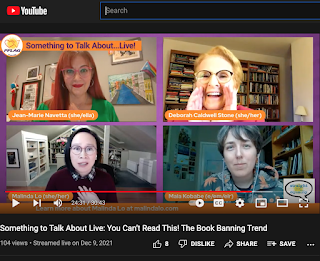
The Book Banning Trend; Transcript of PFLAG National Featuring Deborah Caldwell-Stone, Malinda Lo and Maia Kobabe

"Something to Talk About Live: You Can’t Read This! The Book Banning Trend," by PFLAG National, YouTube, 9 December 2021
Transcript of "Something to Talk About Live: You Can’t Read This! The Book Banning Trend," by PFLAG National, YouTube, 9 December 2021, featuring Liz Owen and Jean-Marie Navetta of PFLAG, Deborah Caldwell-Stone, Esq., of American Library Association, and authors Malinda Lo and Maia Kobabe.  Graphic at right is from source and video itself is embedded below.  Hyperlinks added.

⏤

Liz Owen (00:00): Hello everyone, welcome to Something to Talk About Live. My name is Liz Owen. My pronouns are she and her, and I'm the director of communications for PFLAG National. It is really, really great to have you with us. Uh, I don't wanna waste any time because this is such an important and timely conversation. I'm gonna turn it right over to my friend and colleague, Jean-Marie Navetta. 

Jean-Marie Navetta (00:22): Hey Liz, how's it going? 

Liz Owen (00:23): I'm good. How are you? 

Jean-Marie Navetta (00:25): I'm so excited about this conversation, I can hardly sit still. 

Liz Owen (00:28): I'm gonna get the heck outta here. 

Jean-Marie Navetta (00:30): Yes, so I can dig it all jiggly around here and get very excited and talk about banned books. So thank you, Liz. We'll talk to you later. 

Liz Owen (00:36): You bet. 

Jean-Marie Navetta (00:38): Hey everybody. My name is Jean-Marie Navetta. I'm the director of learning and inclusion at PFLAG National. My pronouns are she and ella. Um, and every single week we get together to talk about something related to LGBTQ inclusion, and so this is a very interesting show. Um, you know, a few weeks ago, um, my colleague Greg Rokisky, who is our social media guru, um, came to me and said, "I have this idea. There's this whole thing with these books being banned and I think we should talk about it." And he started to construct the list and construct what this could look like. And I'm so excited that this is really happening. 

Jean-Marie Navetta (01:11): Um, so for those of you who like to read the article and the questions, um, and read along, you can go to straightforequality.org/discussionseries. And that is where you will find this week- weeks article which is entitled, "Librarians Are Resisting Censorship of Children's Books by LGBTQ+ and Black Authors." And that appeared in "The 19th" and it was written by Nadra Nittle. Um, so to have this conversation, we have three absolutely incredible guests. Um, we have first, um, Deborah Caldwell-Stone, who is the director of the American Library Association's Office for Intellectual Freedom. We have Maia Kobabe, who is the author of "Gender Queer: A Memoir," and we have Malinda Lo, the author of "Last Night at the Telegraph Club," which was just named one of the National Book Award winners for, uh, Young People's Literature. So welcome everybody. And thank you for being here. 

Maia Kobabe (02:04): Hello. 

Malinda Lo (02:04): Hello. 

Deborah Caldwell-Stone, Esq. (02:05): Hello everyone. Thanks for having me. 

Jean-Marie Navetta (02:07): Oh, thank you so much for being here and for joining us for this really, really important conversation. So I wanna get right into the content. Um, so for those of you who haven't read the article yet, it is a pretty shocking piece when you actually get into some of the numbers and the ways this effort is actually showing up. So, Deborah, I was wondering if we could start with you. So one of the interesting things, and by interesting, I mean kind of horrifying things, um, but I saw in the article was that the ALLA, ALA had reported that between, uh, if we looked at September 2020 and September 2021, um, the reports of attempts to ban books had gone up about 60%, which is kind of an outrageous number for one year. So what's happening out there, and what do you think is behind the sudden urgency for this effort? We know this isn't a new effort, but it does seem to be ramping up. 

Deborah Caldwell-Stone, Esq. (02:57): No, I think we're seeing, um, the results of a fairly loosely, uh, I'll be fair, it's loosely organized campaign among a number of advocacy groups, uh, to impose a kind of, uh, orthodoxy on what's available to young people in school libraries and public libraries. Um, we're seeing groups like MassResistance, the anti-LGBTQ group, get involved with challenges. Um, we're seeing, uh, Heritage Action, which is part of Heritage Foundation, Parents Defending Education, Moms for Liberty, and they're all targeting specific books. Um, they're target, you know, it seems like the main target for their ire are books that deal with the experiences of LGBTQIA persons, um, or that are meant for families led by same sex couples or things like that. 

Deborah Caldwell-Stone, Esq. (03:48): Um, what's really insidious about their, uh, efforts is that their effort to frame any materials dealing with gay, queer, transgender persons as inherently obscene for minors. And when I say minors, they're talking about anyone under the age of 18, so that there's no accommodation for adolescents, young adults preparing for adulthood at all. And some of their rhetoric makes it sound like books that are intended for high schoolers are in the hands of five year olds. Um, and the that's been remarkably effective as well. So we're seeing elected officials join the bandwagon. Uh, the governors of Texas and South Carolina have both promised to erase quote pornographic materials unquote from school libraries and public libraries. Um, we're seeing the pa, uh, proposal of legislation that would make it possible for, uh, librarians and educators to be criminally charged for providing materials to young people that parents don't approve of. 

Deborah Caldwell-Stone, Esq. (04:50): Um, and we're seeing, uh, really this rhetoric, this framing around these issues, that's being really destructive. We're seeing equal efforts as well, targeting, uh, materials, dealing with racism, the black American experience, black history, it seems to be a twin campaign that feeds off of each other, both, uh, LGBTQ materials and materials that they're targeting under that, you know, false rubric of Critical Race Theory. Um, and, and we, we sometimes see challenges, uh, brought by one group to both sets of materials at one time at school board meetings. 

Jean-Marie Navetta (05:27): Yeah, it is. It's been very intense. Um, and, and, and you just keep seeing more and more in the headlines. Um, you mentioned something about the age of, of readers and how this is being portrayed. Um, Malinda, your book is recommended for readers, um, grades nine and up, so it's hardly a children's book. Um, could the level of resistance to your book actually surprise you given who it was written for? 

Malinda Lo (05:53): Um, well, you know, I think the resistance has only really popped up this fall. So "Telegraph Club," um, came out in January and it's done really well over the past year. Like it's, it's sold really well, it's garnered a lot of, um, awards and I mean, and critical acclaim. It won the National Book Award. I mean, I think that the reason it got on these lists is because it's been doing pretty well. Um, I, I think that the, the thing to remember is that, um, you know, book challenges are kind of random in the past, like it's not clear why certain books are challenged. It's not clear that people actually have read the books that are being challenged. And oftentimes, yes, I can see you all nodding. (laughs) 

Malinda Lo (06:36): I can, you know, know, oftentimes the ones that are challenged are the best sellers, because those are the ones that people are aware of. Um, so, so far, uh, these challenges have not affected "Last Night at the Telegraph Club" at all, as far as I can tell, but there is the issue that, um, overt book banning is not the only way it can cause harm. I mean, the... This, they have this chilling effect on- 

Deborah Caldwell-Stone, Esq. (07:02): Absolutely. 

Malinda Lo (07:02): ... teachers and librarians that can lead them to self censor and not acquire books at all out of fear that they will be challenged. And, you know, people have their jobs on the line and I can understand why they would do this, but it's a very... It's just a hard problem, you know, because we can't fight... 

Deborah Caldwell-Stone, Esq. (07:20): Absolutely. 

Malinda Lo (07:20): ... We can't resist what we don't know about. 

Jean-Marie Navetta (07:22): Exactly. 

Malinda Lo (07:22): So if they're not even buying the books, what, what can we do? 

Deborah Caldwell-Stone, Esq. (07:25): Yeah. And, and that's really the intent behind some of these efforts is, you know, we actually saw library staff charged with pandering obscenity to minors, um, in Wyoming. And now the prosecutor, fortunately, dismissed those charges, didn't, uh, act on them. But, you know, if you're an educator, if you're a librarian and you know that this is going on, you know, and especially in rural communities, small towns, and things like that, it's really easy to decide that you want to avoid the controversy and not acquire the book at all. And that's a real shame because we know that in those communities, that there's always young people who want or need the information, want to know about these experiences, or exploring their own gender identity, sexual identity issues, and they really need to be able to reach out and see themselves reflected in library collections. And when that doesn't happen, it, it just, impoverishes their whole experience, educational experience, their whole, whole life, and really defeats the whole purpose of what libraries are all about. 

Jean-Marie Navetta (08:30): It, it's true. You know, it was interesting, um, getting ready for today's show, I read both of the books. Couldn't put either one of them down. (laughs) If you haven't read these books, you absolutely should make it a, your business to start reading them there, just so good. And interestingly enough, um, Maia, I read about your book before I actually read your book. And so I went into it sort of wondering what was I going to see compared to what article says, and when I got to some of those places, it... When you read the context, when you read the whole thing, I, I literally could not figure out what was going on. So, um, you wrote a great, uh, well wrote and drew, um, a great "Washington Post," um, editorial about, um, the response to "Gender Queer," which is just so amazing. What did it feel like to know that your personal story has suddenly made you this kind of lightning rod, um, for other people's resistance? 

Maia Kobabe (09:21): Yeah, it was very strange. Um, I, my book has been out for even longer than Malinda's. It actually came out in 2019. It's been out for two and a half years at this point. And when it first came out, I did brace myself for some resistance. I know that it's really common for queer stories to receive push back online. So I kind of like braced myself a little bit for that. But when it didn't come in the first two years, I thought this is probably fine, it's... I'm safe now. Um, and then I really feel like what's happened is that this book, my book, Malinda's book, and a lot of other books have just been caught up in what really feels like a viral social media moment. And I absolutely do think that the majority of the people challenging the books have not read them. 

Maia Kobabe (10:00): So for me, I'm really not taking it as a judgment on my work or on my book, I'm really taking it as like my book is, uh, particularly vulnerable because it is illustrated, so it's really easy to flip it open and grab the singular, um, visual images that people disagree with out of context and really easy to like, get them viral online, maybe easier than it would be like a, a paragraph of like written text. Um, so huh I mean, it's, I- I'm not happy about it obviously. It's been, it's been a very distracting and kind of upsetting time. Um, but on the other hand, like Malinda said, it's like, it hasn't hurt the book at all. The sales are up, it's doing great. Many people have reached out to me in the past couple of weeks to say, "I saw your book was banned and therefore I decided to read it and I really enjoyed it," which is like a weird little silver lining. 

Maia Kobabe (10:48): And really what I'm coming to see is these book bans don't really hurt the book or the author, what they hurt is the communities. It's, it's like, I'm when I'm seeing it as is a community attacking itself. And like Deborah said, impoverishing itself. 

Jean-Marie Navetta (11:01): Yeah. Yeah. I, you know, I couldn't help as I read both of your books, thinking about, uh, as I've joked a million years ago, being in high school, there were no books like yours (laughs) on the shelves. And I always go back, you know, I, I have these moments where I go back and I think 15, 16 year old me, how would it have been different now? And I think these would've... These kind of books would've been lifelines. Um, Deborah, you know, this whole idea of what appears in schools, what youth have access to, the role that their parents have in controlling this has certainly become very much of a political tool. In fact, a lot of people have put, have pointed to Glenn Youngkin's campaign in Virginia, which, one of his commercials actually featured, uh, a student reading, uh, Toni Morrison book, um, as one of the reasons that he was successful there that this, this whole theme, this drum that is being beat, um, is, succee-, you know, is why he won. Do you think we're gonna see more of that, um, in the future as we head towards another round of elections? 

Deborah Caldwell-Stone, Esq. (11:57): Absolutely. I think that, um, I, I, I would actually argue that it wasn't one of the, um, primary reasons why Youngkin won his election, but I think that what, the lesson they took from that it's a way of activating, um, suburban women, that trended toward voting for Biden in the presidential election, and to draw them in, and to create controversy around that, um, and, and activate the that particular set of voters. And so we're seeing these groups, Moms for Liberty, um, or Parents Defending Education, they're doing anything, but, but they're out there, they're recruiting, they're organizing, um, uh, campaigns. We're actually seeing efforts to target and recall school board members who vote to support intellectual freedom, to support access to these materials. Um, and so I think it's going to be a real factor in elections. 

Deborah Caldwell-Stone, Esq. (12:56): And you can look at the, um, actions of the one state rep in Texas [NOTE: Matt Krause] who created that list of 800 and fif- 849 bad books. Um, and it's drawing him attention and otherwise he would be a nobody in the race for Attorney General in Texas. It it's got that, did exactly what he wanted, which was to elevate his profile and get him attention. And he didn't really ask for anything to happen with these books, he just asked, "Do you have these books in your library?" And the sad thing is, is we're now hearing from school districts in, um, in Texas, that there are a number of 'em using that list to identify and pull books simply because they appeared on his list without anything more. 

Deborah Caldwell-Stone, Esq. (13:42): And it it's in of course the majority of the books were either LGBTQIA themed, or dealing with, uh, race or racism. Uh, so, you know, it's, uh, you know, I think that we'll certainly see it, and we're certainly already seeing discussions of state legislatures. We know that there will be a bill pending in Georgia, a bill's already been introduced in Florida, uh, all aimed at providing tools for censorship, uh, aimed at what are called diverse materials, diverse topics in schools and libraries. 

Jean-Marie Navetta (14:15): Yeah. It's, it's definitely on the move. Malinda, you da, your book wh, it, it, wasn't just about, um, uh, a, you know, LGBTQ characters or anything, it had a lot of themes. It was coming of age, it was about race, it was about sexual orientation, it was about expression, it, it all came into play. Um, do you think it was this combination that led to so much ire? Because I have to admit as I read it, I thought I really have a hard time putting my finger on any one thing that I would call problematic. (laughs) I mean, it was so many different themes that we need people to, to learn, uh, to learn about. So do you think it was the combination, or do you think there was one thing that really attracted attention? 

Malinda Lo (14:54): Uh, well, first of all, I wanna, I wanna note that I have not faced anywhere near the amount of, uh, book challenges and resistance as Maia has with "Gender Queer." Like my books have always kind of floated under the radar, I think maybe because they're novels about queer girls and that doesn't seem as, as threatening as novels about trans and gender queer people. Um, it's, it's an interesting situation, um, to find my books in now, because as Deborah mentioned, that list of 850 books includes, uh, my first novel "Ash," which was published in 2009. 

Maia Kobabe (15:30): Oh my gosh. 

Malinda Lo (15:30): I mean, that book has been out for so long. Uh, it's a lesbian retelling of "Cinderella" that has, I don't know. I mean, they could... That actually was attempted, somebody did try to challenge that when it first came out, but that it didn't work. Um, so I, I think that, again, the problem is they're not really reading these books- 

Maia Kobabe (15:50): No. 

Malinda Lo (15:50): ... in the ways that readers read them. You know what I mean? Like I follow this, um, researcher on Twitter, Richard Price, and he's been getting some of the complaints from the school districts where these books are being challenged, including one school district where "Last Night of the Telegraph Club" is on their list of pending books to discuss. They've already removed Maia's book from their school district there. Um, but so Richard Price received these complaints and they say nothing on them when they ask, why are you challenging this book? It just says parental complaint, that's it? 

Maia Kobabe (16:21): Yeah. 

Malinda Lo (16:21): There's no detail. So I'm really not convinced that, uh, they know why they're challenging these books. (laughs) 

Deborah Caldwell-Stone, Esq. (16:28): I can confirm that because we, uh, we solicit reports from educators and librarians across the country, which goes into our most challenged book lists. And we're getting reports particularly about "Gender Queer" that, um, repeat the very same language from a social media post. 

Maia Kobabe (16:49): Yeah. 

Deborah Caldwell-Stone, Esq. (16:50): So we know that they're challenging this based on social media reports that they're reading or outrage articles in, you know, right wing press, and they're not actually reading the book. Uh and and you know, it's not uncommon for that to happen, but this really is... This is, part of this is fueled by social media and outrage and and deliberate... 

Jean-Marie Navetta (17:11): It is. It definitely is. And it ah, in some ways I'm surprised by what you just said, and in other ways, I'm, I'm not [inaudible 00:17:16] zero ways. So Maia, you know, we've been talking about sort of the front side of this, you know, what the bans look like and what making us inaccessible can look like. But, um, your book, as you said, it's been out a little while. Um, we are not talking about the impact that it's had on the readers. Um, and it's really significant. Could you talk a little bit about some of the feedback that you've received from readers, especially the younger ones, um, and, and what that's been like. 

Maia Kobabe (17:43): I've been getting so many messages from readers. I mean, ever since the beginning, I, when the book first came out, I was getting, uh, multiple specifically Instagram DMs. Yes, so from likely from young people, like a week, and a lot of people saying things like, "This is the first time I've ever seen myself represented in a book," or like, "I had... I've never heard this described this way," or, "I didn't even have the language to describe this." And then my favorite type of messages are when people say, I, like, "I shared this with my parents, and then now they like understand me better." Or like, "It's opened up conversations we hadn't been able to have before," or sometimes the reverse and sometimes like people say, "I'm a non-binary parent and I share this with my child." And that's like, really, just like so heartwarming and so lovely. 

Maia Kobabe (18:23): And there has been an uptick of messages again, since like the recent banning and some of them yes, are people saying, I, I heard about this because of the ban. And then I think other peoples maybe are seeing it, yeah, maybe slightly more prominently displayed in a bookstore or something and, um, and reaching out. Or, or librarians and teachers saying like, "I have this book in my classroom and I'm gonna make sure it stays in the classroom and on the shelf." So that's really heartwarming and heartening. 

Jean-Marie Navetta (18:48): What, what, I I I, you know, opposition is typically not listening to us and they don't particularly care about what's going on, but what is the thing that you wish that they could see or hear about books like yours? 'Cause I think they're so riled up in maybe not even reading the book and just getting to the ban, what are they missing that they're not listening to? 

Maia Kobabe (19:08): I think that they're missing how like smart young people are, and how most, especially like teen and middle grade readers, if they come across this type of material, it's often 'cause they're seeking it out because they're already questioning these topics because they want to know things about this. And that includes topics of Critical Race Theory or civil rights, students rights, and you know, sexual health and abortion, which are all topics that also showed up on that 850 book list. Like teens are so smart and they're so curious and they really want knowledge about the world, but sometimes they feel too like shy or hesitant to like ask like a parent or a teacher directly. 

Maia Kobabe (19:44): And so, um, and I also know like as a teen, a couple of times I did come across a book that felt like it wasn't quite right for me, but I was very good at being like, I'm not ready for this book and setting it aside. And I think that they're not counting on, yeah, just how smart and thoughtful young readers are and that they are ready... If they're ready for this material, like they will know. Yeah. And then, and just the fact that you can learn so much from books that are both also about people that are completely different from you and it can really like open up windows of empathy. 

Jean-Marie Navetta (20:12): Yes. I have to know while I was reading yours, I was actually saying this to one of my colleagues earlier as somebody who's who identifies incredibly as incredibly binary, cisgender and gay, (laughs) there were so many parts of it where I found myself saying, I, I know what that feels. Oh my goodness. I, I have that too. And I, and it, it was such an eyeopener to me, even as an adult, or at least that's what I'm told, to have these moments. And again, it left me with that wonder 15, 16 year old me wishing that she had that book. So, uh, we have about 10 minutes left and I wanna spend time talking about what we should be doing, um because PFLAGers are, um, nothing, if not acts, uh, action oriented. 

Jean-Marie Navetta (20:49): So Deborah, I wanna start with you. So how can everyday advocates be of service here? Um, how can they help defend librarians, defend the selections that are coming in in libraries? 'Cause I, I was listening to the point that you started with, that this isn't just about banning, but this is sometimes about intimidating librarians from bringing certain content in. So what should people be doing, um, with libraries and librarians? 

Deborah Caldwell-Stone, Esq. (21:12): In the present moment, start showing up at board meetings, I'm dead serious. We've, you know, we've... I think we've gotten into the habit of kind of ignoring small, local elected boards, school boards, library boards, and they're taking advantage of that. They're targeting those groups. And so we need people to show up and speak up at board meetings. More importantly, we need people to show up and vote in these elections. We do know that they're organizing deliberately to take over seats with an anti, um uh, excuse me, a pro censorship agenda. And we've already had it happen in three library boards out west where individuals who vowed to scrub the library of LGBTQ materials were elected to the library board. And because boards are the decision makers, they set the policy, they make the decisions, they may well have the power to do that if someone doesn't go to court and challenge it. 

Deborah Caldwell-Stone, Esq. (22:07): So get involved with local elections and pay attention to your local press. If you don't have any, pay attention to your local media. Join local, uh, if you've got a friends group for your local libraries, if you've got a PTO, that's another place where you can make a real impact in, uh, changing the rhetoric around the schools. Because these people get attention because they're the loudest voices. 

Maia Kobabe (22:29): Yes. 

Deborah Caldwell-Stone, Esq. (22:29): They need counter voices. 

Jean-Marie Navetta (22:31): Yeah. 

Deborah Caldwell-Stone, Esq. (22:31): So I guess what we're saying right now is, you know, engage, you know, engage in your, your local community and be involved with your schools and your libraries. Um, if there's a support group, join it, um, and pay attention to what's going on, participate in elections. Better yet, stand for election. Stand for those seats, compete for them, offer an alternative vision so that people know that censorship isn't the lesson we wanna be teaching our young people today. It's really, uh, it it's really as fundamental as that, but also, um, and, and, and pulling out a little bit further, state legislatures. You know, and I know that it seems like we're powerless that we've been gerrymandered to death, but even a few voices at a hearing can help turn away censorship legislation at this point. 

Jean-Marie Navetta (23:19): I know it would be unprofessional for me to cheer, but just know in my head I'm cheering right now at every word that you just said. (laughs) Get involved in your school board, this has been a strategy at my position for years, we need to play the same game, but even better. Um, so, um, both Mel, um, Malinda and Maia, I would love to hear from you, um, from the perspective of content creators. So what can advocates do to protect books like yours, um, what can parents and students do? And maybe Malinda, we can start with you and then Maia. 

Malinda Lo (23:46): Sure. You know, I, I think that something that I am still very concerned about is this self censorship, this quiet censorship, where the books are just not acquired. And I really want to encourage parents to talk to your kids, you know, ask them what they're reading at school, ask them if they, you know, it depends on your relationship with your kid, but ask them, you know, if they hear about anything like this going on at their school. You know, because the biggest problem is that we don't know what's happening. 

Maia Kobabe (24:14): Yeah. 

Malinda Lo (24:14): So if you find out about a book challenge at your school or an instance when a book has been silently removed, you know, get on your social media networks and tell people about it, to tell your local community, tell people on your Facebook groups. You know, I tell me. 

Deborah Caldwell-Stone, Esq. (24:30): Tell the ALA. (shouting) 

Malinda Lo (24:31): I wanna know. Tell... 

Jean-Marie Navetta (24:32): Tell the ALA. 

Malinda Lo (24:36): ... Tell the ALA. 

Maia Kobabe (24:36): Yeah, there's a form on the ALA website, like right in. 

Malinda Lo (24:37): Yeah. Tell people because that's the only way we'll know. Like a lot of times people ask me if my books have been banned and I'm just like, "Well, I only know if it's in the news." (laughs ) 

Maia Kobabe (24:46): Yeah. 

Malinda Lo (24:47): You know, because people don't necessarily come and tell the author. And I can't speak for other authors, but if you find about me, tell me (laughs), I wanna know. I'm, I'm, I'm, I'm on Twitter, just, just tell me. And so, you know, spread the news. I think we all have to share this information. 

Maia Kobabe (25:03): Right. 

Jean-Marie Navetta (25:04): I think so much of this happens in darkness. I mean, people just are not... It it's, it's not seen, and so it slides by. Maia, what about you? What do you think? 

Maia Kobabe (25:11): Yeah, I was just gonna say about my... The first time I heard about "Gender Queer" being banned was through the ALA's Banned Book field report from 2020. And there must have been a couple instances in 2020 that I literally never heard about until the book report, field report came out in September of this year. Um, I would say, yeah, um, checking the book out from the library and so that the librarian's like, "No, all this is in circulation and people are interested in this, and then if there's not a copy available of either of our books or any book that you see, that's banned that you wanna try reading." Um, every library has a some- something on the website where you can request a purchase and you can like request that they buy it. And I think librarians seeing those purchase requests, like it's sort of like, uh, that is also almost like an email or like a direct voice of them knowing like, oh, people in the community are interested in this and they want this available and they want to read this. 

Jean-Marie Navetta (25:58): Excellent. Excellent. Um, I, I really appreciate that, 'cause I think so many people, um, often feel powerless. I mean, sometimes this feels like the train is left the station and I think they're is always an opportunity to get it back. And I think these are really tangible suggestions. Things like requesting the book, letting people know that there in, in fact is demand for this content... 

Maia Kobabe (26:16): Yeah. 

Jean-Marie Navetta (26:17): ... Um, is, is so absolutely critical. So, um, I'm going to take my book nerd privilege, um, moment here, um, which is asking all of you, um, to tell us something fantastic that you have been reading lately. Um, because I think one of the best things that we can do with our platforms, isn't just talk about the problems, but talk about what is going right and what we are really enjoying. Um, and so, um, I'm gonna start again with Deborah so we can go around. 

Deborah Caldwell-Stone, Esq. (26:40): Oh, huh, I have to say I've been so busy, I haven't had a lot of time for recreational reading for the last few months. Um, but actual highlight a book I still cherish, and that's "The Absolutely True Diary of a Part-Time Indian." And it was just, uh, a glimpse into a world I didn't know anything about and, and the experiences of, uh, the protagonist and, and, you know, navigating the two worlds, his life on the res and, and the life in the white high school and things like that. Um, and I just enjoyed it. I remember vividly, uh, working on a challenge in a small community where all the young men in the community, all the 14 year olds were carrying the book because it was the first time they'd ever read a book that accurately reflected their lives living in rural poverty. And they, they were just so devoted and it was a heartbreaking when the board voted to remove the book from the, the library collection. Um, but that- that's one book I really cherish. 

Jean-Marie Navetta (27:41): Thank you. Um, Malinda. 

Malinda Lo (27:45): Well, I, I wanna talk about this wonderful book, "The Legend of Auntie Po" by Shing Yin Khor... 

Maia Kobabe (27:49): Yes. 

Malinda Lo (27:50): ... which is a graphic memoir. It's absolutely beautiful, the art is wonderful. And, um, the thing about this book is, so my novel "Last Night of the Telegraph Club" is about a queer Chinese American girl in the 1950s. There are very few books about queer Chinese American girls in history. This is another one (laughs) and it just came out this year. It's set in the 1800s, and the main character is in a logging camp. It's wonderful. And it's about, um, self-made myth, and coming of age, and exploring her identity as a queer person as well. It's a wonderful book, highly recommend it. 

Maia Kobabe (28:25): Second that, I love that book. 

Jean-Marie Navetta (28:26): I love the fact that, that we're like this, but we didn't think these books existed and yet here they all are. So that's right. It's so exciting. Maia, go ahead. I'm sorry I interrupted. 

Maia Kobabe (28:34): No, that's okay. I love that book. I'm friends with the author. We did a book event together earlier this year. 

Malinda Lo (28:38): Oh, great. (laughs) 

Maia Kobabe (28:39): Um, I wanted to shout out a book that I think has been a little under the radar, just "Out of Salem" by Hal Schrieve, which is, um, a book that's set in a high school in which there's like magic and sort of supernatural elements. And there is a werewolf character and zombie character, and they're both like queer and they become friends. And like, there's also a lot of really rich metaphor of like of monstrosity and queerness and the way people, you know, view other sexualities and other bodies as monstrous, but that can be like reclaimed and people like finding each other who have been sort of like pushed to the margins of their societies. And I just thought it was really, really well written. And, um, I believe it came out in early, early this year. 

Jean-Marie Navetta (29:16): Thank you. Um, thank you all. Uh, this was such an absolute treat. It was an absolute gift that when we came up with the idea, I wasn't sure if we'd be able to make it happen in here, all of you are having this conversation. Um, I'm so grateful to you for your time. I'm even more grateful for you to, for your advocacy and your creativity, and what you are putting out into the universe and giving people who sometimes feel like they are never gonna be seen a way to see themselves, um, and then defending the ability that for those books to remain on shelves. So, um, Deborah, Malinda, Maia, thank you so, so very much, and please keep up the incredible work that you are doing. 

Maia Kobabe (29:52): Thank you for having us. 

Deborah Caldwell-Stone, Esq. (29:53): Thank you for hosting this. 

Malinda Lo (29:54): Yeah. 

Jean-Marie Navetta (29:55): Thank you. Well, everybody, this gets us to the end of yet another show. Um, it's always hard to end these, um, when the conversation is that good. We will be back next week with actually our last show of 2021. I almost said 20, I'm so confused. Um, we will wrap up the same way we do every single week, which is reminding you to run fast, laugh hard, and most of all be kind, but please, please, please, if you haven't done it yet get vaccinated, and if you have been vaccinated, go get your boosters, um, so we can all be together again sometime soon. If you need any help before next week's show, um, make sure you visit pflag.org/find to locate your lo-, uh, closest chapter. My name is Jean-Marie Navetta, and I will see you next week on Something to Talk About Live. Bye everybody. 

⏤

Source:

"Something to Talk About Live: You Can’t Read This! The Book Banning Trend," by PFLAG National, YouTube, 9 December 2021.


Join PFLAG National live this Thursday, December 9th at 4:30 PM ET/1:30 PM PT for Something to Talk About Live! This week we'll be discussing Nadra Nittle’s article in the 19th, “Librarians are resisting censorship of children’s books by LGBTQ+ and Black authors.”

We are excited to welcome Maia Kobabe, author of Gender Queer: A Memoir, Malinda Lo, author of Last Night at the Telegraph Club, and Deborah Caldwell-Stone, Director of the American Library Association’s Office for Intellectual Freedom to the conversation this week.

For more information--and to check out our discussion questions in advance--visit https://pflagnation.al/STTALive-120921.

License

—
@AdvInCensorship, @ALALibrary, @DefendingEd, @GlennYoungkin, @GovAbbott, @GregRokisky, @hal_schrieve, @henrymcmaster, @Heritage, @Heritage_Action, @JoeBiden, @malindalo, @MassResistance, @Moms4Liberty, @NadraKareem, @OIF, @PFLAG, @RepMattKrause, @sawdustbear, @washingtonpost, @19thnews